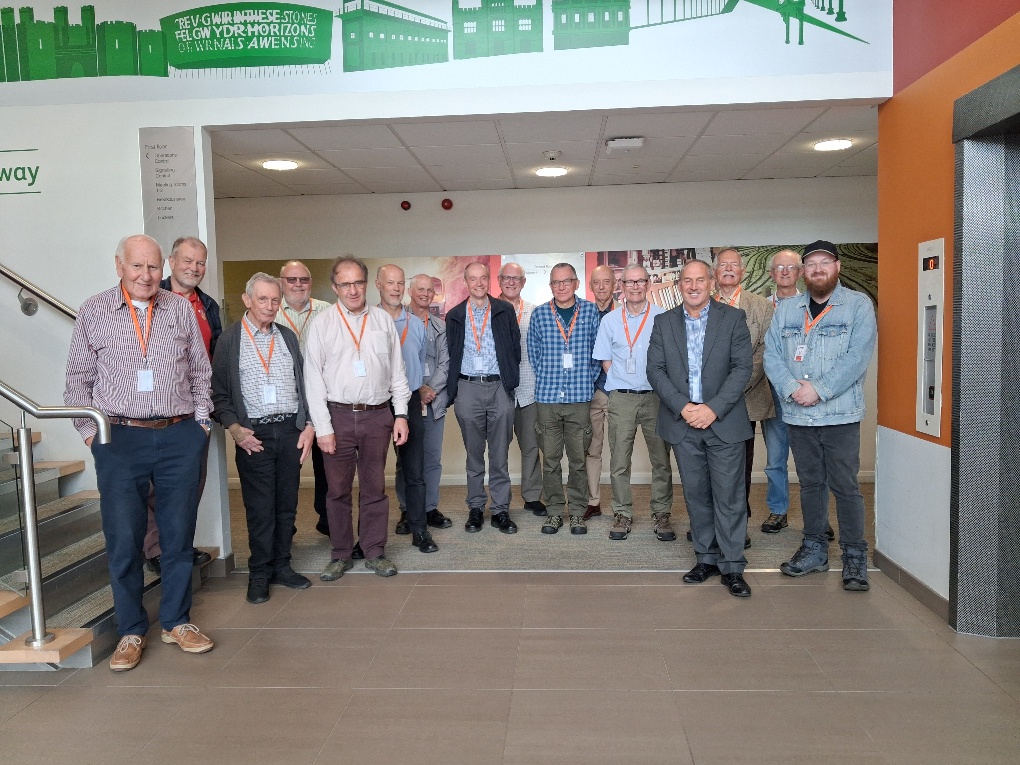
WRRC Visit to Network Rail's Operating Centre, Cardiff: Friday 19th June Photo 1 - Fifteen WRRC members were treated to an excellent visit to Network Rail's Cardiff Signalling Centre - or Rail Operating Centre, to give its proper title - on 19th June. Stephen Thomas, the Centre's Head of Control, gave up 3 hours of his time to impart his extensive knowledge and experience of the work performed by the Centre and took us on a tour of the building to give us a flavour of how it operates.
Having had a managerial responsibility for Port Talbot panel box in the early 1980's, I was keen to see how the modern, but geographically more extensive, equivalent compares. I expected a significant change over a timespan of 46 years, but the extent and scale of the change was a real eye-opener. On arrival at the Centre, one is struck by the building's size and the level of security which protects it. The Centre has perimeter fencing topped with barbed wire, numerous security gates and doors, and we were required to provide our names in advance and had ID checked before entry. Sadly, all very necessary in today's climate of high security risks.
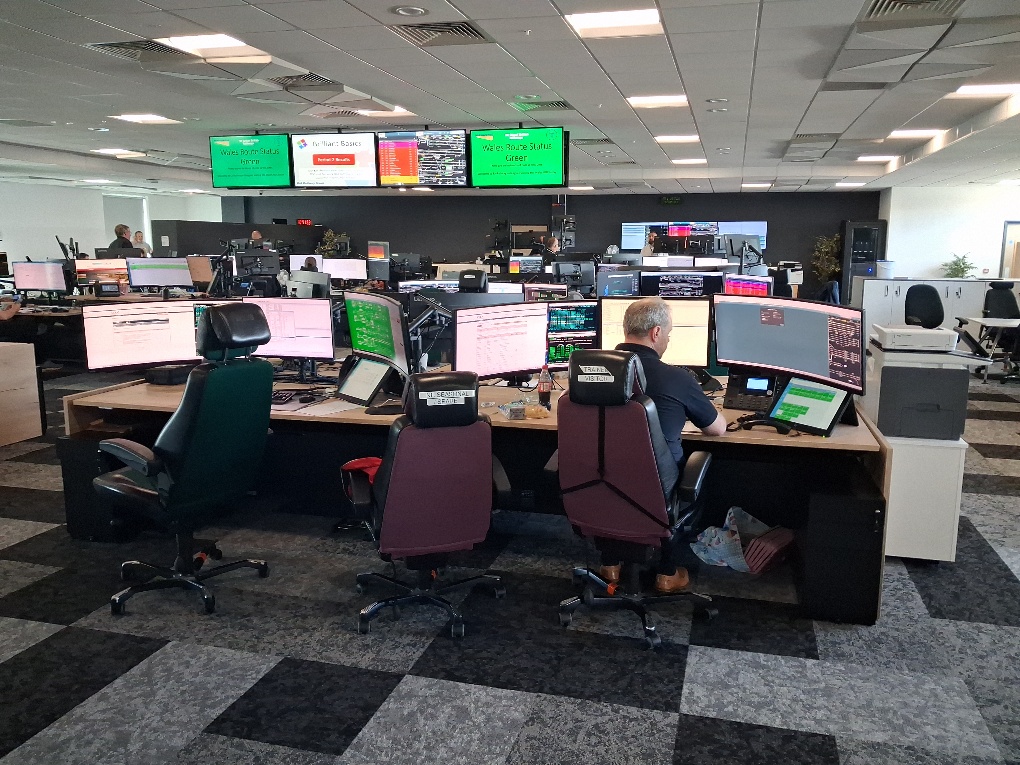
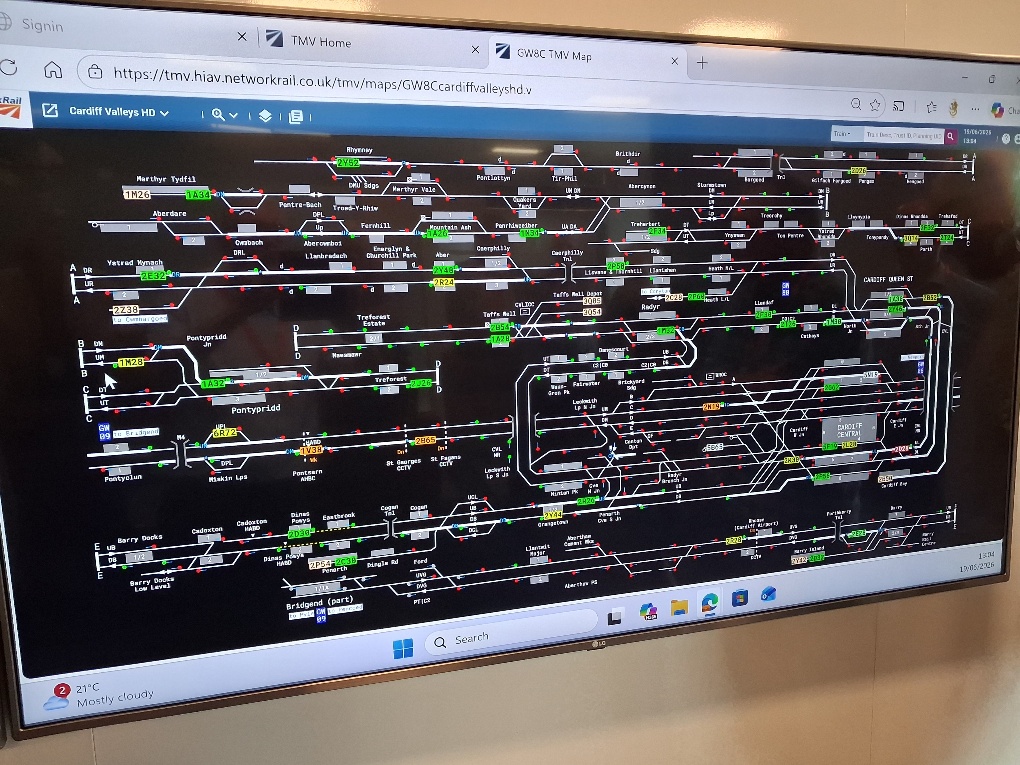
Photo 2 - This is more than a signalling centre. It is an integrated signalling and control centre with representatives from NR, GWR, TfW (main line services) and BT Police so that incidents and train running issues can be properly and fully co-ordinated with real-time input from all parties involved. The Centre covers most of Wales, the exceptions being west Wales for which there is a satellite Centre at Port Talbot due to there being insufficient floor space at Cardiff to accommodate the workload, a separate Centre at Machynlleth for the ERTMS being used on the Cambrian lines and TfW's Cardiff Valleys being signalled and controlled from Taff's Well.Photo 3 - The basis of the signalling system is automatic route setting with signallers intervening should out-of-course running occur. To assist, individual train IDs are colour coded according to timekeeping as they pass through the geographically based workstations, allowing late running services to be easily identified for special attention. Very close liaison is maintained between signallers and controllers, the latter focusing on the management of incidents, train service recovery, and delay attributions between companies. The control room also has a BT Police presence for a real-time response when necessary. Network Rail has mobile Operations Managers geographically spread so that incidents across Wales can be attended quickly.
There is a high focus on proactive management. On the day of our visit, very high temperatures were being forecast for the following week, and so Network Rail were working hard to ensure their assets were in the best possible shape to meet the challenge and were liaising closely with Train Operating Companies to adjust services to minimise performance risks. Modern IT systems are available to assist as, for example, any potential problems affecting point detections are flagged up allowing remedial work before the risk of failure occurs.
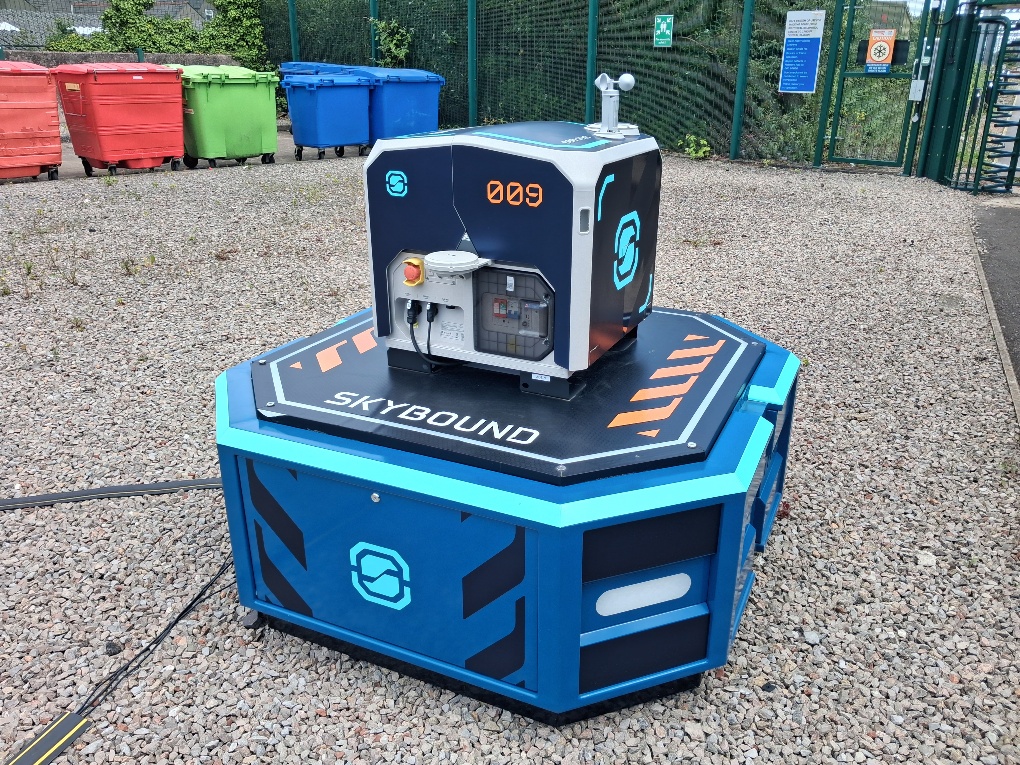
Photo 4 - Our visit included a look at the training simulator for signallers, providing a comprehensive range of operating scenarios for training purposes in a risk-free environment and we were shown the Major Incident Room, held in readiness with information screens and a table around which places are individually marked for a top team of company representatives in support of the Strategic Commander. Finally, we observed the Centre's drone, resting outside the building to be dispatched to any incident for which a bird's-eye view would be beneficial, e.g. trespass.
Our visit provided an excellent insight into what goes on in that rather mysterious, highly protected building located on the up-side west of Cardiff Central station and many thanks are due to Stephen Thomas for taking the time to show us each of the functions the Centre performs, for giving us the benefit of his extensive knowledge and experience and for tirelessly answering the many questions our interest generated.